
If you wish to make an apple pie from scratch you must first invent the universe. — Carl Sagan
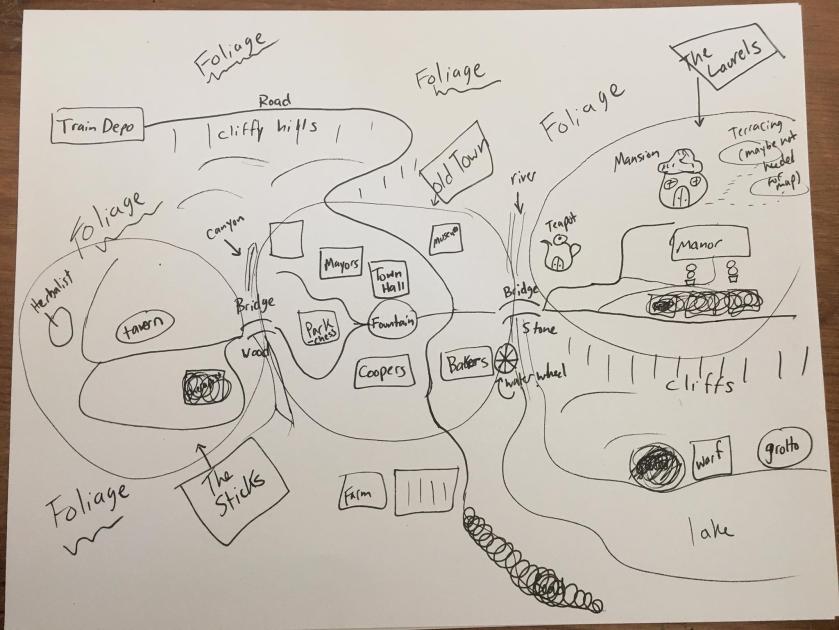
If you wish to make an apple pie from scratch you must first invent the universe. — Carl Sagan
Affordable housing is housing deemed affordable to those with a median household income as rated by country, State (province), region or municipality by a recognized Housing Affordability Index.
Affordable housing is housing deemed affordable to those with a median household income as rated by country, State (province), region or municipality by a recognized Housing Affordability Index. In Australia, the National Affordable Housing Summit Group developed their definition of affordable housing as housing that is, “…reasonably adequate in standard and location for lower or middle income households and does not cost so much that a household is unlikely to be able to meet other basic needs on a sustainable basis.” In the United Kingdom affordable housing includes “social rented and intermediate housing, provided to specified eligible households whose needs are not met by the market.” Most of the literature on affordable housing refers to mortgages and number of forms that exist along a continuum – from emergency shelters, to transitional housing, to non-market rental (also known as social or subsidized housing), to formal and informal rental, indigenous housing and ending with affordable home ownership.
Housing choice is a response to an extremely complex set of economic, social, and psychological impulses. For example, some households may choose to spend more on housing because they feel they can afford to, while others may not have a choice.
This article uses material from the Wikipedia article Affordable housing, which is released under the Creative Commons Attribution-Share-Alike License 3.0.
Urban renewal, which is generally called urban regeneration (“regeneration” in the United Kingdom), “revitalization” in the United States, is a program of land redevelopment in areas.
Urban renewal, which is generally called urban regeneration (“regeneration” in the United Kingdom), “revitalization” in the United States, is a program of land redevelopment in areas of moderate to high density urban land use. Renewal has had both successes and failures. Its modern incarnation began in the late 19th century in developed nations and experienced an intense phase in the late 1940s – under the rubric of reconstruction. The process has had a major impact on many urban landscapes, and has played an important role in the history and demographics of cities around the world.
Urban renewal involves the relocation of businesses, the demolition of structures, the relocation of people, and the use of eminent domain (government purchase of property for public purpose) as a legal instrument to take private property for city-initiated development projects. This process is also carried out in rural areas, referred to as village renewal, though it may not be exactly the same in practice.
In some cases, renewal may result in urban sprawl and less congestion when areas of cities receive freeways and expressways.
Urban renewal has been seen by proponents as an economic engine and a reform mechanism, and by critics as a mechanism for control. It may enhance existing communities, and in some cases result in the demolition of neighborhoods.
This article uses material from the Wikipedia article Urban renewal, which is released under the Creative Commons Attribution-Share-Alike License 3.0.
Environmental planning is the process of facilitating decision making to carry out land development with the consideration given to the natural environment, social, political, economic and governance factors and provides a holistic framework to achieve sustainable outcomes.
Environmental planning is the process of facilitating decision making to carry out land development with the consideration given to the natural environment, social, political, economic and governance factors and provides a holistic framework to achieve sustainable outcomes. A major goal of environmental planning is to create sustainable communities, which aim to conserve and protect undeveloped land.
Environmental planning concerns itself with the decision making processes where they are required for managing relationships that exist within and between natural systems and human systems. Environmental planning endeavors to manage these processes in an effective, orderly, transparent and equitable manner for the benefit of all constituents within such systems for the present and for the future. Present day environmental planning practices are the result of continuous refinement and expansion of the scope of such decision making processes.
In the United States, for any project, environmental planners deal with a full range of environmental regulations from federal to state and city levels, administered federally by the Environmental Protection Agency. A rigorous environmental process has to be undertaken to examine the impacts and possible mitigation of any construction project. Depending on the scale and impact of the project, an extensive environmental review is known as an Environmental Impact Statement (EIS), and the less extensive version is Environmental Assessment (EA). Procedures follow guidelines from National Environmental Policy Act (NEPA), State Environmental Quality Review Act (SEQRA) and/or City Environmental Quality Review (CEQR), and other related federal or state agencies published regulations.
This article uses material from the Wikipedia article Environmental planning, which is released under the Creative Commons Attribution-Share-Alike License 3.0.
Municipal solid waste (MSW), commonly known as trash or garbage in the United States and as refuse or rubbish in Britain, is a waste type consisting of everyday items that are discarded by the public.
Municipal solid waste (MSW), commonly known as trash or garbage in the United States and as refuse or rubbish in Britain, is a waste type consisting of everyday items that are discarded by the public. “Garbage” can also refer specifically to food waste, as in a garbage disposal; the two are sometimes collected separately.
The composition of municipal solid waste varies greatly from municipality to municipality and changes significantly with time. In municipalities which have a well developed waste recycling system, the waste stream consists mainly of intractable wastes such as plastic film, and non-recyclable packaging materials. At the start of the 20th century, the majority of domestic waste (53%) in the UK consisted of coal ash from open fires. In developed areas without significant recycling activity it predominantly includes food wastes, market wastes, yard wastes, plastic containers and product packaging materials, and other miscellaneous solid wastes from residential, commercial, institutional, and industrial sources. Most definitions of municipal solid waste do not include industrial wastes, agricultural wastes, medical waste, radioactive waste or sewage sludge. Waste collection is performed by the municipality within a given area. The term residual waste relates to waste left from household sources containing materials that have not been separated out or sent for reprocessing.
This article uses material from the Wikipedia article Municipal solid waste, which is released under the Creative Commons Attribution-Share-Alike License 3.0.
 NOTES
NOTES 
You must be logged in to post a comment.